

The $400 Question Hiding in Your Pet Policy
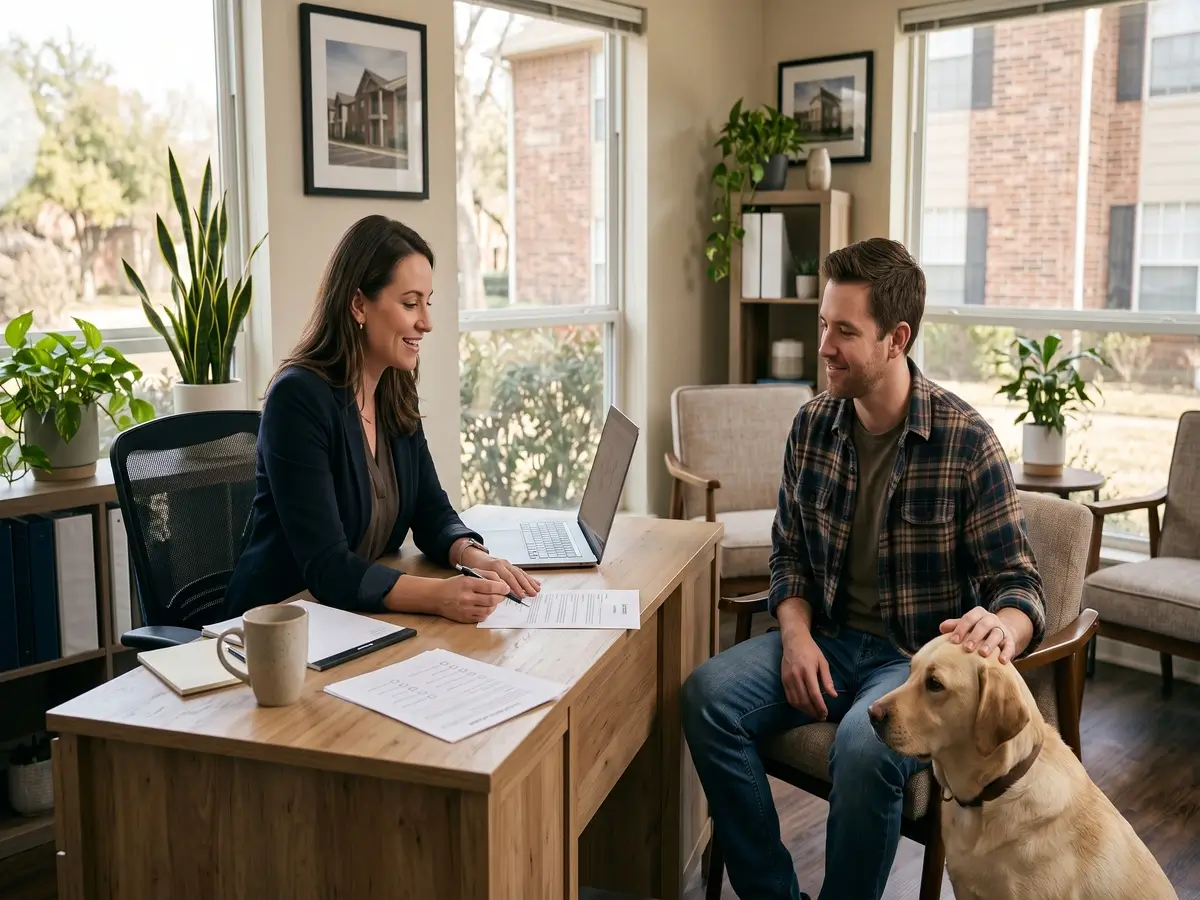
Your tenant hands back the keys after two good years with Max, a well-mannered Lab. The carpet looks fine. The backyard survived. Then the text comes in: “When can I expect my $400 pet deposit back?”
You check the lease. It says nonrefundable, so case closed, right? Not quite. In Texas, the law cares more about what that money was for than what you called it. One word can turn a routine move-out into a dispute that costs far more than $400.
Pet charges feel simple until money is on the line. This guide walks through pet deposits, pet fees, and pet rent under Texas law, so you know what to collect, what to return, and how to protect your property.
Key Takeaways
Here is what every Texas landlord should know before setting a pet policy.
Deposits are refundable by design: Under Texas Property Code Section 92.102, money held to secure lease performance is treated as a security deposit, regardless of what the lease calls it.
Fees can be nonrefundable: A clearly labeled one-time pet fee pays for the added cost of allowing an animal and is not subject to the 30-day refund rule.
Texas sets no dollar cap: State law does not limit pet deposit or fee amounts, but every charge should be reasonable, written into the lease, and applied consistently.
Assistance animals follow separate rules: Texas law bars deposits and extra charges for trained service animals, and HUD's 2026 guidance changed how untrained ESAs are handled.
Pioneer 1 Realty by the Numbers |
31 years: of rental management experience across Dallas-Fort Worth |
36 months: average tenancy for Pioneer 1 Realty residents |
$2,000: in pet damage protection beyond the security deposit for every pet we approve |
30 days: for Texas landlords to refund deposits or itemize deductions after move-out |
$100 + 3x: bad-faith penalty plus attorney's fees for wrongfully withheld deposits in Texas |
IN THIS GUIDE
Pet Deposit vs. Pet Fee: The Label That Decides Refunds
What Texas Law Actually Limits (and What It Doesn't)
Service Animals, ESAs, and the 2026 HUD Shift
Building a Pet Policy That Holds Up in Dallas County
Pet Deposit vs. Pet Fee: The Label That Decides Refunds
The difference between these charges comes down to purpose, and Texas courts look at purpose before wording.
What a Pet Deposit Really Is in Texas
Chapter 92 of the Texas Property Code defines a security deposit as any advance of money, other than an application deposit or prepaid rent, meant primarily to secure performance under a lease. A pet deposit held against animal damage fits that definition neatly.
It follows the same refund, itemization, and wear-and-tear rules as your standard security deposit. Calling it "nonrefundable" does not change its legal character.
What a Pet Fee Covers
A pet fee is a one-time charge for the privilege of having an animal in the home. It compensates you for added risk, cleaning, or administrative work rather than securing future performance.
A properly written pet fee does not have to be returned. The lease should name it a fee, state that it is nonrefundable, and explain what it covers.
Where Pet Rent Fits
Pet rent is a recurring monthly charge that offsets gradual wear over the life of the lease. Since it is rent, it is earned as paid and never refunded.
Getting the label right at signing is the simplest way to avoid a refund fight at move-out.
What Texas Law Actually Limits (and What It Doesn't)
Texas gives landlords wide pricing freedom but very little room for error once a deposit is collected.
No Statewide Cap on Amounts
Texas does not set a maximum for security deposits, pet deposits, or pet fees. You can price charges to reflect the animal, the property, and your risk tolerance.
Charges applied unevenly between applicants can still raise fair housing concerns, so a written, consistent policy matters.
The 30-Day Refund Clock
Under Section 92.103, you must refund a security deposit, including any pet deposit, within 30 days after the tenant surrenders the premises. If you keep any portion, you must provide a written, itemized list of deductions.
Normal wear and tear can never be deducted. Scratched floors or chewed trim beyond normal wear and tear can be deducted from the security deposit, which is why detailed move-in and move-out inspections are essential.
Bad-Faith Penalties That Hit Hard
A landlord who keeps a deposit in bad faith can owe $100, three times the amount wrongfully withheld, and the tenant's attorney's fees. Missing the 30-day deadline creates a presumption of bad faith.
That makes a mislabeled pet charge one of the cash-flow leaks that DFW landlords often overlook. Timely, itemized deposit accounting is your best defense, and the Texas State Law Library offers a plain-language overview of the rules.
Pricing is flexible, but deposit handling is where Texas landlords most often get hurt.
Service Animals, ESAs, and the 2026 HUD Shift
Assistance animals are not pets, and the rules around them have changed significantly over the past year.
Trained Service Animals Stay Fee-Free
Texas Human Resources Code Section 121.003(h) states that a person with a disability who has a service animal may not be required to pay extra compensation or a deposit for the animal. The tenant remains liable for damage beyond reasonable wear and tear.
That means no pet deposit, pet fee, or pet rent for a qualifying service animal. Documented damage can still come from the regular security deposit.
Untrained ESAs After the Trainor Memo
On May 22, 2026, HUD issued the Trainor Memo, permanently rescinding its earlier guidance on emotional support animals. HUD now pursues Fair Housing Act complaints only when an animal is individually trained to perform disability-related tasks.
The Texas Department of Housing and Community Affairs advises its properties to apply pet charges only at renewal, with advance notice. Courts can still find an ESA to be a reasonable accommodation, so review each request on a case-by-case basis.
A pet policy protects your property only when it is written in compliance with Texas law, not around it.
Building a Pet Policy That Holds Up in Dallas County
A strong policy turns pet approvals into a predictable, defensible process. Here is what we recommend including:
Clear labels for every charge: Name each one a refundable deposit, nonrefundable fee, or monthly pet rent, and state its purpose.
Consistent screening criteria: Apply the same pet standards to every applicant as part of your regular tenant screening process.
A pet addendum: Spell out approved animals, responsibilities, waste cleanup, and liability for damage.
Photo-documented inspections: Record condition at move-in and move-out so every deduction is easy to support.
A separate track for assistance animals: Keep accommodation requests entirely out of your pet fee structure.
For extra peace of mind, every pet we approve comes with up to $2,000 in damage protection, in addition to the security deposit under, our owner guarantees. Pet rules also work best when they match the broader split of landlord and tenant responsibilities in Dallas.
FAQs about Pet Deposits and Pet Fees in Texas
Can a Texas landlord charge both a pet deposit and a pet fee?
Yes, Texas law allows both as long as each is clearly labeled and disclosed in the lease. The deposit must follow refund rules, while the fee can be kept if it is written as nonrefundable.
Can I deduct pet damage from the regular security deposit?
Yes, damage beyond normal wear and tear can be charged to any security deposit you hold. Each deduction must appear on the itemized list sent within 30 days.
Can I charge pet rent for an emotional support animal in Texas?
It depends on whether the animal is trained and whether other laws apply to the property. Because federal guidance shifted in 2026, review each request individually before applying pet charges.
Is there a limit on how much I can charge for a pet deposit?
Texas sets no maximum for pet deposits or fees. Charges should still be reasonable for the market and applied consistently to every applicant.
Charge Smart, Refund Right, and Keep Pet-Friendly Profitable
The right pet charge protects your property; the wrong label can cost you triple.
Pet-friendly rentals attract a wider pool of tenants and often keep them longer, but only when the associated charges are structured correctly. A refundable deposit, a clear nonrefundable fee, and fair pet rent each serve a different purpose under Texas law. Mixing them up is exactly where costly disputes tend to begin.
At Pioneer 1 Realty, we handle pet screening, lease addenda, documented inspections, and deposit accounting for owners throughout Balch Springs and the Dallas-Fort Worth area. We also keep your pet policy aligned with changing state and federal rules, including guidance on assistance animals, so you never have to guess at renewal time.
Ready to welcome pets without the legal guesswork? Call us at 972-286-4700 or explore our Dallas property management services to see how we protect your rental and your returns.